
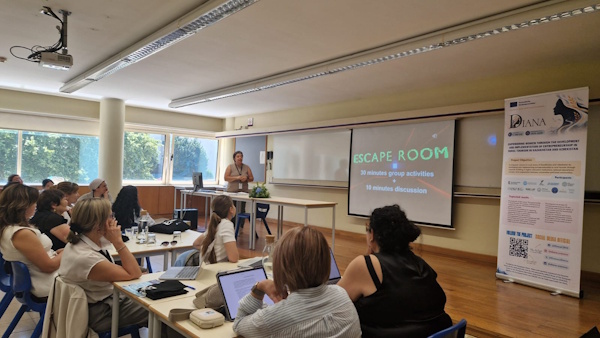
Portucalense University Hosted the First On-site Edition of the Training of Trainers Programme under the Erasmus+ DIANA Project
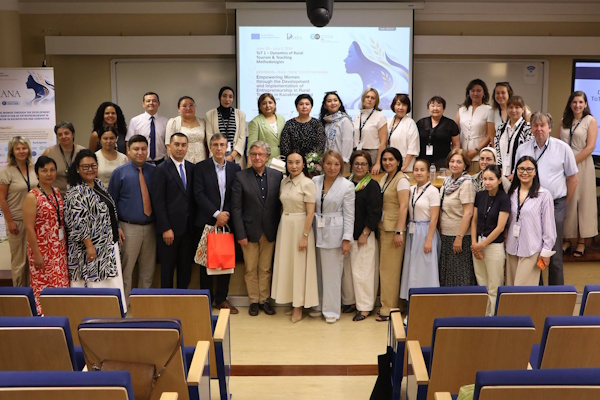
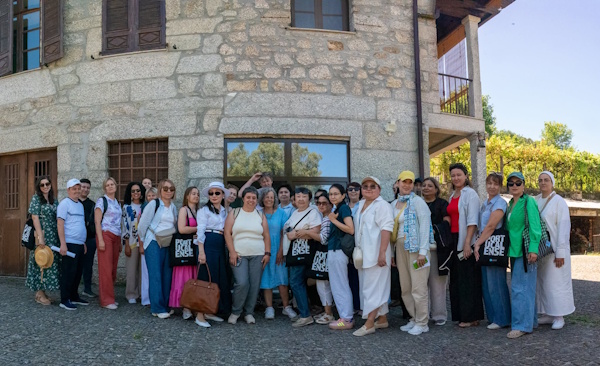
Portucalense University (UPT) hosted, from 29 June to 3 July, the first on-site edition of the Training of Trainers (ToT) programme under the Erasmus+ project DIANA – Empowering Women through the Development and Implementation of Entrepreneurship in Rural Tourism in Kazakhstan and Uzbekistan. The initiative brought together around 30 academics and staff members from universities and associations in Kazakhstan and Uzbekistan, providing an intensive week of training, exchange of experiences, and strengthened international cooperation.
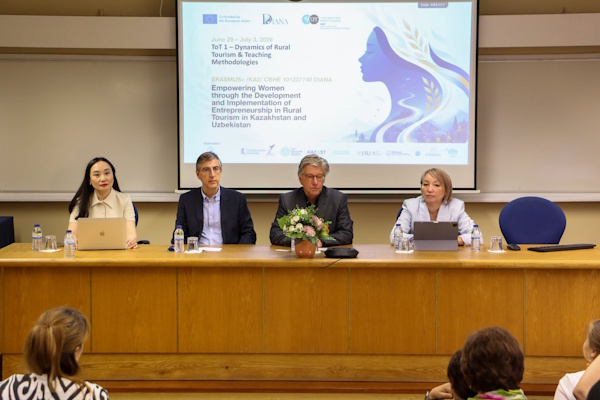
The main objective of the DIANA project is to empower women through the development of entrepreneurship in rural tourism, contributing to the creation of sustainable economic and social opportunities in rural communities in Kazakhstan and Uzbekistan.
The week began with the official opening session, a campus tour, and the project management meeting, during which partners reviewed the progress achieved so far, discussed quality assurance and dissemination activities, and planned the next stages of the project.
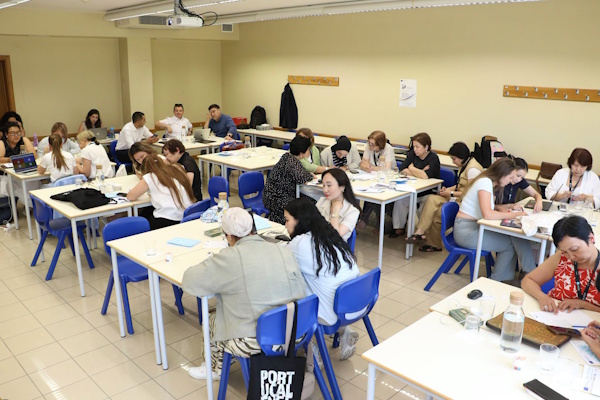
The training programme included three thematic workshops delivered by experts from the partner institutions. The first workshop, “Unlocking Business Opportunities for Women Entrepreneurs in Rural Areas”, was led by Sónia Nogueira, a UPT faculty member, and focused on identifying business opportunities and strengthening the entrepreneurial skills of women in rural contexts.
This was followed by the workshop “Strategic Communication, Networking and Partnership Building for Rural Tourism Entrepreneurs”, delivered by Anastasija Bikova and Jelena Zascerinska from Hochschule Wismar University (Germany). The workshop addressed strategic communication, networking, and partnership development as essential elements for the success of entrepreneurship in rural areas.
Finally, Sandra Fernandes and Isabel Barbosa, faculty members and representatives of UPT’s Pedagogical Innovation Office, delivered the workshop “Project-Based Learning & Design Thinking in Entrepreneurship Education”, exploring active teaching and learning methodologies, with a particular focus on Project-Based Learning (PBL) and Design Thinking as tools to foster creativity, innovation, and problem-solving skills.
One of the highlights of the programme was the study visit to Peneda-Gerês National Park, during which participants had the opportunity to explore two inspiring examples of rural tourism entrepreneurship. In Arcos de Valdevez, they visited Nowhere Desk, an innovative project that combines local accommodation, coworking, and co-living in a rural setting, demonstrating the potential of low-density territories to attract new residents and visitors. Later, in Paredes de Coura, participants visited Casa das Janelas Verdes, a space dedicated to well-being, nature, and personal development, offering retreats and experiences aimed at promoting more balanced and sustainable lifestyles.
In addition to the academic and training activities, participants also had the opportunity to discover the destination of Porto, enjoying moments of social interaction and exploring the city’s cultural and historical heritage. The programme also included a social dinner, which provided an informal setting for sharing experiences and strengthening relationships among participants and project partners.
The programme concluded with group presentations in which participants showcased project ideas and initiatives inspired by the knowledge and experiences acquired throughout the week. This final session highlighted the participants’ engagement with the programme’s contents and encouraged reflection on how these newly acquired skills and insights can be transferred to their home institutions and communities.
By hosting this initiative, Portucalense University reinforces its commitment to internationalisation, pedagogical innovation, and the promotion of a more inclusive, sustainable, and opportunity-generating tourism sector for women and rural communities.
The local organisation of this training week was coordinated by the Portucalense University team involved in the DIANA project, composed of Marília Durão, Makhabbat Ramazanova, Medéia Veríssimo, and Sónia Nogueira.